Monthly Archives: January 2009

Inaugural Trivia


Let’s pretend we are really smart and brush up on our inaugural knowledge. You’ll be the brightest in the room while you watch the swearing in of the 44th President of the United States. Promise.

FACTOIDS:

George Washington’s was the shortest inaugural address at 135 words. (1793)

Thomas Jefferson was the only president to walk to and from his inaugural. He was also the first to be inaugurated at the Capitol. (1801)

The first inaugural ball was held for James Madison. (1809)

John Quincy Adams was the first president sworn in wearing long trousers. (1825)

Franklin Pierce was the first president to affirm rather than swear the oath of office (1853). Herbert Hoover followed suit in 1929.

William H. Harrison’s was the longest inaugural address at 8,445 words. (1841)

The first inauguration to be photographed was James Buchanan’s. (1857)

Abraham Lincoln was the first to include African-Americans in his parade. (1865)

James Garfield’s mother was the first to attend her son’s inauguration. (1881)

William McKinley’s inauguration was the first ceremony to be recorded by a motion picture camera. (1897)

William Taft’s wife was the first one to accompany her husband in the procession from the Capitol to the White House. (1909)

Women were included for the first time in Woodrow Wilson’s second inaugural parade. (1917)

Warren G. Harding was the first president to ride to and from his inaugural in an automobile. (1921)

Calvin Coolidge’s oath was administered by Chief Justice (and ex-president) William Taft. It was also the first inaugural address broadcast on the radio. (1925)

Harry Truman’s was the first to be televised. (1949)

John Kennedy’s inauguration had Robert Frost as the first poet to participate in the official ceremony. (1961) The only other President to feature poets was Bill Clinton. Maya Angelou read at his 1993 inaugural, and Miller Williams read at his second, in 1997. (1961)

Lyndon Johnson was the first (and so far) only president to be sworn in by a woman, U.S. District Judge Sarah T. Hughes. (1963)

Jimmy Carter’s inaugural parade featured solar heat for the reviewing stand and handicap-accessible viewing. (1977)

Ronald Reagan’s second inaugural had to compete with Super Bowl Sunday. (1985)

The first ceremony broadcast on the Internet was Bill Clinton’s second inauguration. (1997)

All but six presidents took the presidential oath in Washington, D.C.The exceptions were:

George Washington—1789, New York City; 1793, Philadelphia
John Adams—1797, Philadelphia
Chester Alan Arthur—1881, New York City
Theodore Roosevelt—1901, Buffalo
Calvin Coolidge—1923, Plymouth, Vt.
Lyndon Baines Johnson—1963, Dallas
When Washington and Adams were sworn in, the U.S. capital had not yet been transferred from Philadelphia to Washington, D.C. (the latter became the seat of government beginning Dec. 1, 1800). Arthur, T. Roosevelt, Coolidge, and L. B. Johnson had all been vice-presidents who assumed the presidency upon the deaths of their predecessors, and none was in Washington, D.C., when the oath of office was administered.

TIME
Except for Washington’s first inaugural, when he was sworn in on April 30, 1789, all presidents until 1937 were inaugurated in March in an effort to avoid bad weather. The 20th Amendment to the Constitution (passed in 1933) changed the inaugural date to January 20. Franklin Delano Roosevelt’s Second Inauguration was the first to have been held on that date.

OATHS AND BIBLES
The oath is taken with a hand upon a Bible, opened to a passage of the president-elect’s choice. Each president has chosen a different passage. Theodore Roosevelt’s 1901 oath was the only one not sworn in on a Bible.

INAUGURAL WEATHER
Between 1789 and 1993, 35 inaugurations enjoyed clear weather. During ten inaugurations it rained, and seven had snow. The warmest inauguration was Ronald Reagan’s first (Jan. 20, 1981). It was 55°. The coldest was Reagan’s second (Jan. 21, 1985). It was 7°.

RETIRING PRESIDENTS
Only four retiring presidents have not attended the inaugurations of their successors. Those who were absent:

John Adams missed Thomas Jefferson’s inaugural.
John Quincy Adams was not present at Andrew Jackson’s.
Andrew Johnson was not at Ulysses Grant’s ceremony.
Richard Nixon was not present at Gerald Ford’s inaugural.

( Sources: The Architect of the Capitol; Facts About the Presidents, Joseph Nathan Kane.)

Don’t you just love minutia?
Last Call


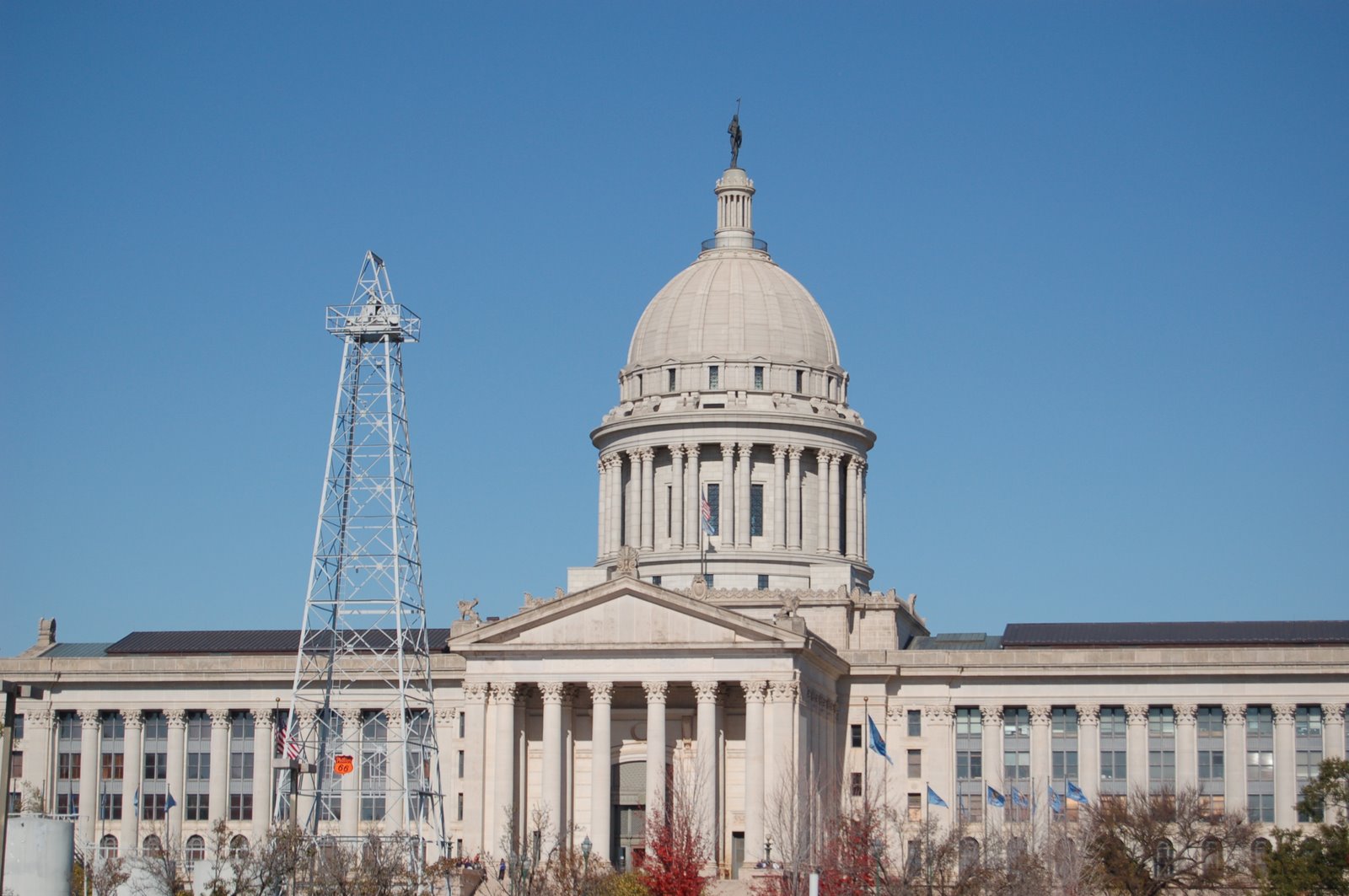
Back in December I wrote about the Bill filing deadline for the upcoming session and how it was the last time you could sign up to run a piece of legislation. Then, my Senator informed me that it was not the final deadline, but simply the first of many and one where you were just reserving your spot. Sort of like a reservation at a restaurant, when you walk in during rush hour, you want your table to be ready. Only this time you are reserving the Bill number, or the “Title of Law”, so you can fill in the blanks at a later date. OK, not a very good analogy, but you get the idea.

Last Thursday was the deadline for the “fill in the blanks” part of the legislating process. Rather, in official terms, the soft deadline for the language part of the Bill, or an opportunity to turn in a rough draft of your proposed legislation, so to speak. TODAY! is the final deadline for the language that will be put into these Bills. Last Call!

Note to self, this language will also be available for the public to read on Friday, January 16th. I am not sure where you can actually find it, but I will ask my Senator and report back.

At this point, there are roughly 3,000 pieces of legislation that have and will be “filed” and will now be assigned to various House and Senate committees. The committee chairman will evaluate each piece of proposed legislation handed over to them and decide which ones deserve a hearing. That is an awful lot of power in a few hands and an awful lot of politicking that is about to take place.

Here is how the process has worked in previous years. When a Bill was sent to a particular committee, if the author was a “D” (Democrat), the Bill would usually receive a hearing. That is because the D’s were in charge. If the author happened to be an “R” (Republican) legislator, then that particular piece of legislation usually wound up in the Senate graveyard. Why, you ask? Because the R’s were in the minority. Simple enough.

Now that the tables are turned and the R’s are in charge, my Senator is hopeful his team will act with more wisdom than politics, doing what is in the best interest of our great state, not their political party. We’ll see.

So, today we celebrate the last call for the language portion of the some 3,000 pieces of legislation that have been filed for the upcoming legislative session. I can hear the sound of those keyboards and coffee makers right now!

The Mailman Cometh

My Senator gets tons of mail. From the moment he was sworn into office, everyone warned him about the amount of mail he would receive, and they were absolutely, 100% right on the money. We get truck loads of mail. 

My Senator reads all of the letters, notes and requests from his constituents. My Senator says that a letter which is hand written by the individual leaves the best impression, as opposed to the form letter that sounds exactly like the dozen or so he might have received the day before. Makes sense. Perfect example, this morning, my Senator received over 150 separate emails concerning a single education issue. Yesterday, the total was 15 for this same issue. It is safe to assume the quantity varies from day to day!

My Senator also responds to his mail in a very orderly fashion. If he gets an email, he responds with an email. A letter that arrives by mail, receives a written response in return. And, if the request comes by phone, the lucky caller will get a call back.

I honestly do not know how my Senator has time to answer all of his mail, but I do know he has a very capable assistant who helps facilitate this process. As you might imagine, this leaves little time to comb through all the magazines and newspapers that arrive on top of the mountain of mail. So, my Senator brings them home to me, because I like have nothing else to do.

I enjoy reading the periodicals.

Arriving in the last batch of postal goodies was a publication by the National Conference of State Legislatures ( NCSL for short). There was an interesting article in there entitled: 15 Tips for Being an Effective Legislator.

Here are their top 15:

1. Honor the Institution
2. Take the High Road
3. Master the Rules
4. Know Where to Get Help
5. Manage your Time
6. Develop a Specialty
7. Vote Your Conscience
8. Don’t Burn Bridges
9. Keep Your Word
10. Be Careful What You Agree to
11. Don’t Hog the Mike
12. Stay in Touch
13. Be a Problem Solver
14. Work with the Media
15. Stop and Smell the Roses

My Senator liked #9, but thinks all newly elected officials need to be aware of #10. My favorite hands down was #1.   

Wouldn’t it be nice if everyone adhered to these words of wisdom?  
If you could offer up a tip for effective legislating, what would you say? Seriously. I want to know.